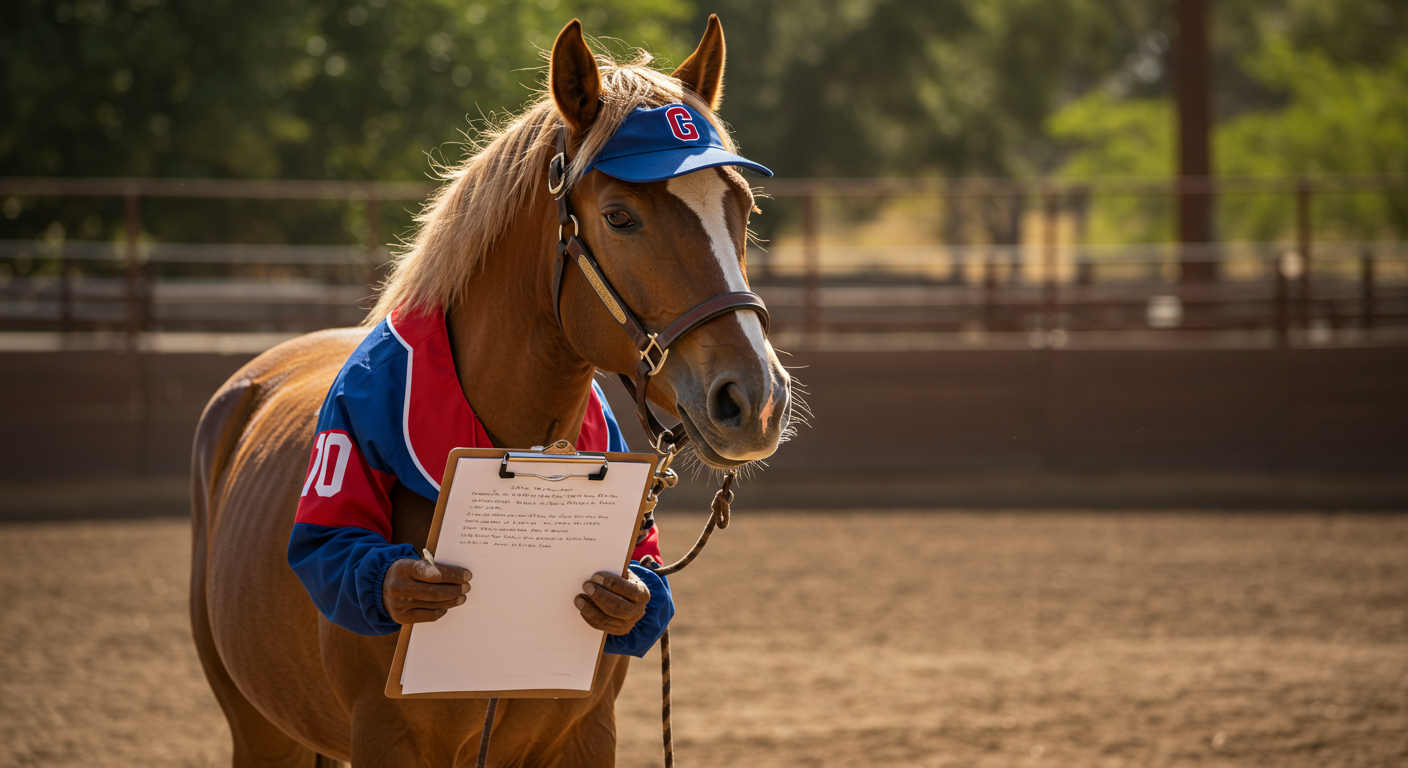
You have the horse. You have the boots. You have the saddle that required three weeks of research, two online forums and a budget conversation with yourself that you'd rather not revisit. And now you're in the arena — and it occurs to you, with some clarity, that your horse knows considerably more about what's supposed to happen next than you do. Welcome to the moment every western rider eventually arrives at: it's time to find a western riding coach. Most people get here later than they should. The good trainers won't say that out loud, but we will.
Why a Good Coach Changes More Than a Better Horse
Here is the mildly uncomfortable truth that most riders discover eventually: in the average horse-and-rider combination, the limiting factor is the one holding the reins. A skilled western coach will identify, in the first ten minutes, what you haven't been able to see for months — seat issues, aids, timing, habits that have quietly calcified into your everyday riding. And they'll explain it in a way that is not deflating but actually useful. That, it turns out, is the craft.
Good coaches don't just reshape your technique. They reshape your relationship with the horse, your ability to problem-solve in the saddle, and your understanding of what western riding actually is — at a level that no piece of equipment has ever achieved. That's a different kind of value, and it tends to compound.
Discipline First — Not Every Coach Fits Every Goal
Western riding is not a single subject. Before searching for a coach, it helps to know where you're headed — or at least have a rough idea of the direction:
- Reining: High-precision sport riding — sliding stops, spins, rollbacks. Reining coaches typically have a strong competition background, run structured sessions and expect measurable progress from both horse and rider. Ideal for anyone who wants to work toward specific goals with clear benchmarks.
- Western Pleasure & Horsemanship: Elegance, refinement of aids, show-ready presentation. Coaches in this discipline place enormous emphasis on balance, invisible communication and the kind of polish that looks effortless precisely because it isn't.
- Ranch Riding & Trail: Terrain confidence, versatility, genuine partnership across varied conditions. Coaches here tend to be pragmatic, experience-led and refreshingly direct. Many have spent significant time outside an arena — and their teaching style reflects it.
- All-Around & Leisure: No competition focus, but solid fundamentals, a reliable horse and genuine confidence in the saddle. The right starting point for most newcomers — and for anyone who rides as a counterbalance to everything else in life, not as a second job.
- Horsemanship & Natural Horsemanship: The integration of groundwork and ridden work, with the rider's mindset at the centre. Coaches in this area tend to ask first: what is the horse trying to communicate? A meaningful complement for any discipline, at any level.
What to Actually Look for in a Western Coach
Beyond credentials and show results, certain qualities consistently separate good coaches from excellent ones:
- Communication: Can they explain things in a way that makes sense to you? A coach who sounds complicated is usually solving their own communication problem, not yours.
- Patience: Western riding takes time. A coach who projects impatience transfers it directly to horse and rider — which is precisely the opposite of helpful.
- Horsemanship: Watch how they handle horses on the ground. In the warm-up. Leading to the arena. That tells you more than any résumé ever will.
- Honesty: Good coaches give real feedback — respectfully, but clearly. Someone who only praises you is pleasant company. Someone who names the error and shows you how to correct it is genuinely valuable.
- References: Talk to current or former students. How has their riding developed? Would they make the same choice again?
- Discipline knowledge from experience: Does the coach know your discipline from active personal experience, or primarily from theory? Both can work — but the distinction matters, and it's reasonable to ask.
Clinic vs. Regular Lessons — Which Works Better?
This doesn't have to be an either/or decision — but it's worth understanding the difference:
- Regular lessons (weekly or fortnightly): Continuous development, a coach who knows horse and rider, visible progress over time. The foundation for lasting improvement. If you can do one thing consistently, this is it.
- Clinics and seminars: Concentrated learning with a specialist, often covering specific techniques or disciplines in depth. Clinics also provide fresh perspective and — if you choose well — an excellent entry point into the European western community.
- Online coaching: Video analysis, feedback on recorded sessions, remote lessons. Genuinely useful for specific issues and as a supplement to in-person work. It does not replace a physical trainer — but as an addition, it is more effective than most people expect.
Red Flags — Please Actually Watch for These
Not every trainer relationship is a good one. Here are the signs that should make you pause:
- Always blaming the horse: "This horse is difficult" can certainly be true. But a trainer who consistently identifies the horse as the problem is usually avoiding the actual problem.
- No clear learning structure: Good coaching has a direction. If after several months you genuinely don't know what you're working on, something important is missing.
- Pressure around horse purchases: A trainer who actively steers you toward a specific horse from a specific seller, without a clearly independent position, may have interests that are not entirely aligned with yours.
- Poor horse handling: Non-negotiable. Anyone who works horses through sustained pressure, fear or pain is not someone to whom you should entrust your horse. Full stop.
- No answers to questions: A good coach explains why things are done a certain way. "Just trust me" is not a teaching method. Curiosity from a student is an asset, not an inconvenience.
- No references, or evasiveness about them: Reputable coaches can point you to students or professional contacts without hesitation. Hesitation is already information.
Getting the Most out of Every Lesson
The lesson itself is one component. What happens before and after determines how much you actually take away:
- Arrive with a question or a goal: What should be better today? If you don't know, your coach doesn't know either. Specific focus produces specific results.
- Take notes immediately after: Memory is good at retaining feelings; it is considerably less reliable with the exact sentence your trainer said twelve minutes ago. Write it down.
- Film sessions where possible: What you feel in the saddle and what appears on video are often two strikingly different things. Both are genuinely informative.
- Practice between sessions — deliberately, not mechanically: Repetition builds. Incorrect repetition builds the wrong thing. Less practice, done more consciously, beats more practice done mindlessly.
- Take feedback seriously, leave the ego at the gate: This is easier said than done — but riders who are genuinely open to correction learn three times as fast as those who aren't.
The European Western Coaching Scene
Europe has a genuinely active western riding community — with the strongest concentration in Germany, Austria and Switzerland, but with growing scenes in Italy, the Netherlands, Belgium and beyond. A few orientation points:
- NRHA Europe: The National Reining Horse Association Europe is the governing body for Reining on this side of the Atlantic. Many of the best Reining coaches are NRHA-licensed or have verifiable NRHA results.
- DQHA (Deutsches Quarter Horse Verband): Oversees competitions, trainer licences and judging in Germany — a useful first stop for trainer recommendations in the German-speaking market.
- American clinicians in Europe: Top US trainers travel to Europe regularly for week-long or day-long clinics. These events are intensive, educational and — often — an excellent way to connect with the European western community at its best.
- Local clubs and associations: Consistently underrated. People who are involved locally know coaches from personal experience — which is the most direct form of recommendation there is.
Finding Western Coaches in Europe
Find a coach who fits your goals, your horse and your schedule. On Dream Quarters, you'll find western trainers and coaches across Europe — with profiles, discipline information, experience backgrounds and direct contact details. No intermediary, no waiting.
Western Coaches on Dream Quarters
- Trainers from Germany, Austria, Switzerland, Italy and across Europe
- Clear profiles: discipline, level, lesson format (individual, group, clinic)
- Experience background and competition history where applicable
- Direct contact — no waiting, no intermediaries
Final Thoughts — The Right Coach Changes Everything
A good horse and a good coach together are a genuinely powerful combination. Take your time finding the right person. Try a single lesson before committing to anything ongoing. Ask questions. Watch how they handle horses. And trust your instincts — they are usually right about people.
The most memorable part of western riding, for most people who stay with it long enough, is not a specific achievement. It is the journey — and the people who helped make it meaningful along the way.
"A good coach doesn't give you the answers — they ask the right questions." — Dream Quarters Team