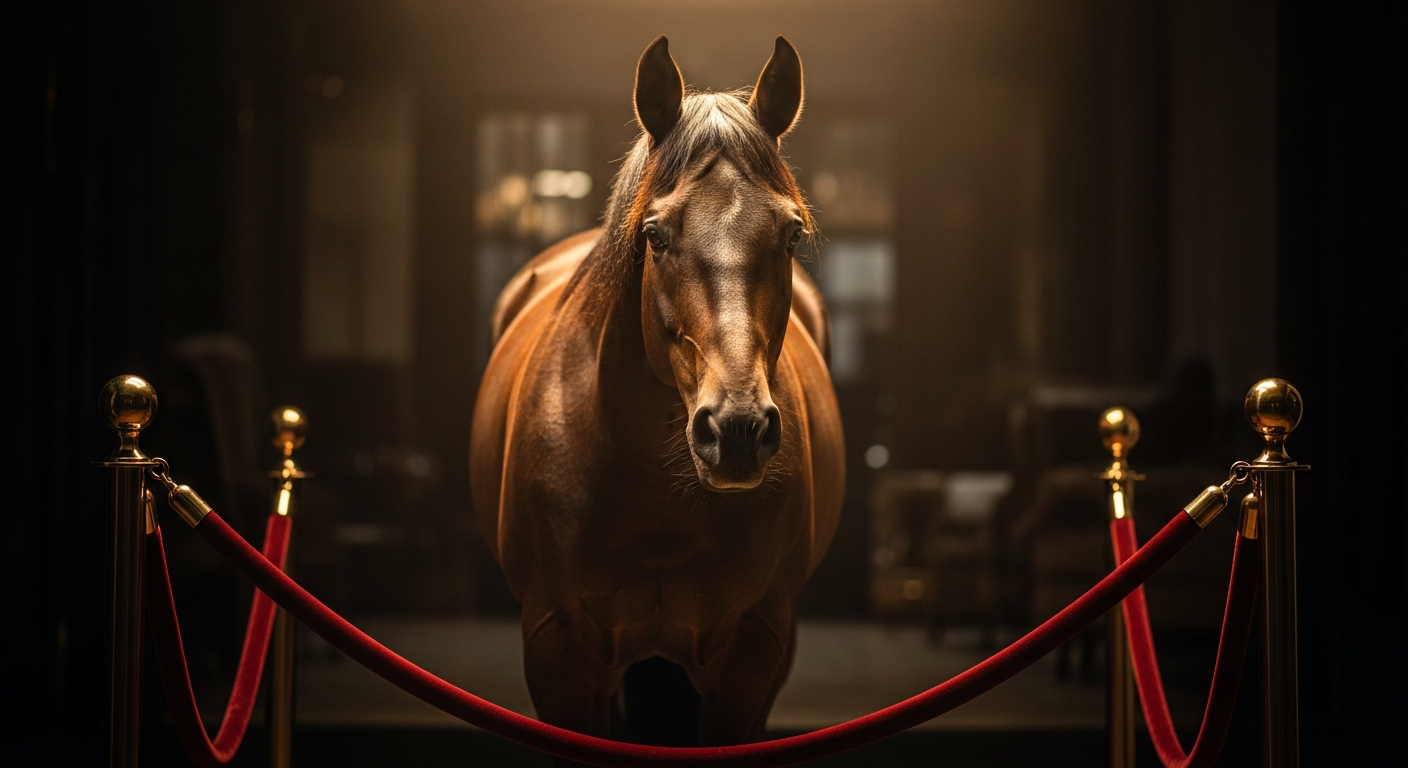
There's a moment that happens to almost every western rider. You sit on a Quarter Horse for the first time, feel that particular combination of power and calm underneath you, and think quietly: "I'm in trouble." Your head says you're just looking. Your heart has already named it. And your bank account will learn, slowly and with great dignity, to accept its new role in life. Welcome to buying a Quarter Horse in Europe — the most rewarding, most expensive, and absolutely most addictive hobby you will ever take up. We say this with full love and zero regret.
What Makes the Quarter Horse So Unavoidable?
The name gives it away: Quarter Horses sprint a quarter-mile faster than any other breed on earth. But nobody in the western world buys one for the lap times. You buy one for the temperament. That "I've got this, don't worry about it" energy a good Quarter Horse carries around like a second nature — even while you, the rider, are slightly panicking on the inside. They are calm, genuinely intelligent, people-oriented and trainable at every level, as if somewhere in their breeding history they collectively decided that working with humans was actually worth their time.
- Build: Compact, muscular, wide hindquarters — the classic western body type that looks as good on a ranch as it does in the show pen
- Movement: Smooth jog, controlled lope — delivered with an inner serenity that makes riders look considerably more competent than they are
- Character: Balanced, willing, even-tempered even under competition pressure. The kind of horse that keeps you honest and forgiving in equal measure.
- Versatility: From the very first riding lesson to the NRHA Futurity finals — they genuinely do it all, and they do it with style
In Europe, Quarter Horses are registered through the AQHA (American Quarter Horse Association) — the world's largest horse breed registry. The sheer scale of it tells you something comforting: you are very much not alone in this particular obsession.
Quarter Horse Prices in Europe — The Honest Numbers
Here's the part where someone sits you down with a kind expression and explains that buying the horse is, financially speaking, merely the opening chapter. But first — the actual purchase prices for the European market:
- Foal, untrained: €2,000 – €8,000 (elite pedigrees go higher — you may want to start saving now)
- Young horse (2–4 years), started under saddle: €4,000 – €12,000
- Pleasure horse with solid training: €5,000 – €15,000
- Sport horse (Reining, Cutting, All-Around): €15,000 – €60,000
- Elite competition horse with proven record: €60,000 – €250,000+ (this is where the jokes stop for a moment)
A word on bargains: a trained, rideable Quarter Horse listed under €3,000 deserves healthy scepticism. Missing registration, vague health history or horses started without proper training are common at that price point — and those problems tend to surface later, usually as a rather memorable vet bill.
Bloodlines: What the Pedigree Actually Tells You
At some point while buying a Quarter Horse, someone will say "by Peptoboonsmal out of a Smart Chic Olena daughter" with enormous enthusiasm, and you'll nod thoughtfully as though you were already fully informed. Here's your quick briefing — no exam afterwards:
Reining & Cutting — the performance athletes
- Peptoboonsmal — the most decorated Cutting sire in history. His offspring have cow sense factory-installed
- Smart Chic Olena — Reining legend, known for softness and a level of trainability that tends to make trainers emotional
- Dual Rey — exceptional Cutting sire, athleticism as standard equipment
- Spooks Gotta Whiz — NRHA Million Dollar Sire, producing fast, sharp Reining types who know exactly what they're about
- Gunner (Colonels Smoking Gun) — one of the most influential Reining sires worldwide; barely a European pedigree without him somewhere in it
All-around & Pleasure — the reliable everything-horses
- Poco Bueno — classic western bloodline, calm and dependable as a good pair of boots
- Doc Bar — foundational for Trail, Ranch and Cutting, still very much relevant decades later
- Hollywood Dun It — beautiful movement, willing character, the horse that quietly makes beginners look like they know what they're doing
A reputable breeder will walk you through exactly what the bloodline means for your horse's temperament, discipline suitability and future foals. If they answer with a shrug — that's already an answer. Keep walking.
Pre-Purchase Exam — Please, We're Begging You, Don't Skip This
We understand. You're already a little in love. The horse looked at you just so. The seller is perfectly lovely. But a veterinary pre-purchase examination (PPE) is non-negotiable whether you're spending €5,000 or €50,000. Love is blind; radiographs are not. The standard tiered system in Germany and Austria works as follows:
- Level I: Clinical examination — eyes, heart, lungs, teeth, limbs
- Level II: X-rays of limbs and spine
- Level III: Ultrasound (tendons, ligaments) and airway endoscopy
- Level IV: Blood work including drug screening
For a pleasure horse, Levels I–II typically cover it. For a competition or breeding horse, request at minimum Levels I–III. The vet must be independent — never the seller's own vet. That's a bit like asking the car dealer to conduct your independent inspection.
AQHA Registration in Europe — The Famous Blue Paper
Registration runs through the national member associations:
- Germany: Deutsches Quarter Horse Verband (DQHA) — AQHA Europe member
- Austria: Österreichischer Quarter Horse Verband (ÖQHV)
- Switzerland: Swiss Quarter Horse Association (SQHA)
- Italy: Associazione Italiana Quarter Horse (AIQH)
At purchase you receive the AQHA Certificate of Registration — the famous blue paper. Check that name, microchip number and colour match the actual horse standing in front of you. Transfer of ownership via AQHA online currently costs approximately $35 USD — which, in the full context of this hobby, is genuinely the least expensive thing you will ever spend on a horse. Savour that moment.
Horses without AQHA papers may well be purebred Quarter Horses — but without registration, offspring can't be entered, a significant hit to value for breeding animals.
Disciplines — There Is a Quarter Horse for Every Dream
Quarter Horses dominate western sport, but they have proven themselves across far more disciplines than you might expect. Fair warning: watching Reining live has a near-perfect conversion rate into horse purchase intentions.
- Reining: The pinnacle of western riding — sliding stops, spins and rollbacks at the highest level. You will not leave a show without a vague idea of what you'd name yours.
- Cutting: The horse works the cattle entirely alone, on its own initiative. The rider holds on, tries not to interfere, and marvels quietly. Pure instinct and athleticism.
- Ranch Riding & Ranch Trail: The all-around sport simulating real ranch life — including some very convincing imaginary cattle
- Western Pleasure & Horsemanship: Elegance and precision in the show pen. It all looks effortless, which is the cumulative result of an enormous amount of work.
- Trail: Obstacle courses testing real-world reliability, calmness and partnership
- Pleasure Riding & Hacking: Quarter Horses are fearless, sure-footed and built for long days. Perfect for the kind of riding that reminds you why you fell in love with horses in the first place.
Monthly Costs — The Part Nobody Mentions at the Beginning
The purchase price is the opening act. Here's a realistic monthly breakdown for Germany, Austria and Switzerland — offered with warmth, solidarity, and absolutely no judgement:
- Boarding (stable + pasture): €250 – €650/month depending on region. Munich is expensive. Everything in Munich is expensive.
- Feed (hay, grain, minerals): €80 – €150/month. Quarter Horses don't eat more than other horses — they just do it with more dignity.
- Farrier (every 6–8 weeks): €50 – €120 per visit. That is shoes for four legs, every six weeks. The maths is what it is.
- Routine vet care (vaccines, teeth, deworming): approx. €400 – €800/year — when everything goes smoothly. When it doesn't, adjust your expectations accordingly.
- Horse insurance (surgery + liability): €50 – €120/month. One of the best decisions you can make. Please make it.
- Training & shows: €100 – €500+/month. This is the line in the budget spreadsheet where most people stop filling in exact numbers.
Total monthly budget: Minimum €500–€800 for a pleasure horse; €1,000–€2,000+ for a competition horse with coaching. And yet — every single person who has one will tell you it is worth every last euro. Without hesitation.
Common Mistakes When Buying a Quarter Horse — You're Not the First
We've seen a great many buyer journeys. Here are the classics — shared with full empathy, because most of us have been here at some point:
- Skipping the pre-purchase exam: "He looks healthy" is not a veterinary diagnosis. Lameness often shows only under load or on firm ground. Always get an independent PPE — no exceptions, no matter how much you already love him.
- Buying based on content: Flattering light, creative camera angles and smart editing can conceal a surprising amount. A horse must be seen in person, handled and ridden before you commit.
- Not checking references: Ask the seller for contact details of previous buyers. Reputable breeders provide them without hesitation. Hesitation itself is already information.
- Wrong discipline match: A highly trained Reining horse is not a relaxed weekend trail companion. Ask what the horse's actual week looks like — not just its show record.
- Deciding under pressure: "There's another buyer coming tomorrow morning" is one of the oldest lines in the book. Legitimate sellers do not rush you. Visit twice, on different days, before committing.
- Missing the follow-up budget: Transport, a settling-in period, new equipment and initial vet visits all add up. Budget at least 10–15% above the purchase price as a cushion.
- No written contract: A handshake between western riders is a lovely tradition. It is not legally binding. Always put everything in writing, including return rights, warranties and transport responsibilities.
A prepared buyer protects themselves — and makes sure the partnership lasts as long as the hobby does. Which, once you have a Quarter Horse, tends to be the rest of your life.
Where to Find Quarter Horses for Sale in Europe
The single most important piece of advice: buy only from transparent, verifiable sources. On Dream Quarters, you'll find Quarter Horses from verified breeders and private sellers across Germany, Austria, Switzerland, Italy and beyond — every listing with bloodline information, training level and direct contact.
Quarter Horses on Dream Quarters
- Horses directly from breeders and private sellers across Europe
- Clear listings with bloodline, price and direct contact
- Breeder profiles with stable presentation, foal announcements and reference horses
- Breeding stallions with AQHA bloodlines and performance records
Read next: If your dream horse is abroad, our guide on horse transport in Europe covers paperwork, costs, and EU rules.
Read next: Considering a foal instead of a finished horse? Our foal-buying guide covers selection, pedigree, vet check and realistic costs.
Read next: Once you have found your Quarter Horse, the contract is what carries you through a dispute. Our horse purchase agreement guide walks through what must be in it, from identification to PPE clause to risk transfer.
Read next: Before you commit, do the honest math. Our guide how much does a Western horse cost? walks through realistic ranges for purchase, board, farrier, vet and insurance across DACH and Italy — May 2026.
Read next: Want the full bloodlines deep-dive? Our dedicated Quarter Horse bloodlines guide for Europe covers every major reining, cutting, trail and pleasure line — with genetics and European market context.
Final Thoughts — Finding the One
Buying a Quarter Horse is not a transaction. It is the beginning of an adventure that will cost more per month than you'll care to calculate precisely, fill your weekends with something that starts to feel non-negotiable, and give you a relationship with an animal that is — honestly — unlike anything else.
Take your time. Get expert support. Never skip the pre-purchase exam. Buy with clean papers. Find a bloodline that fits what you want to do together. And then enjoy every single ride — including the ones where things don't go to plan, because those tend to be the stories you tell for years.
"The best horse isn't the most expensive — it's the one that fits you." — Dream Quarters Team