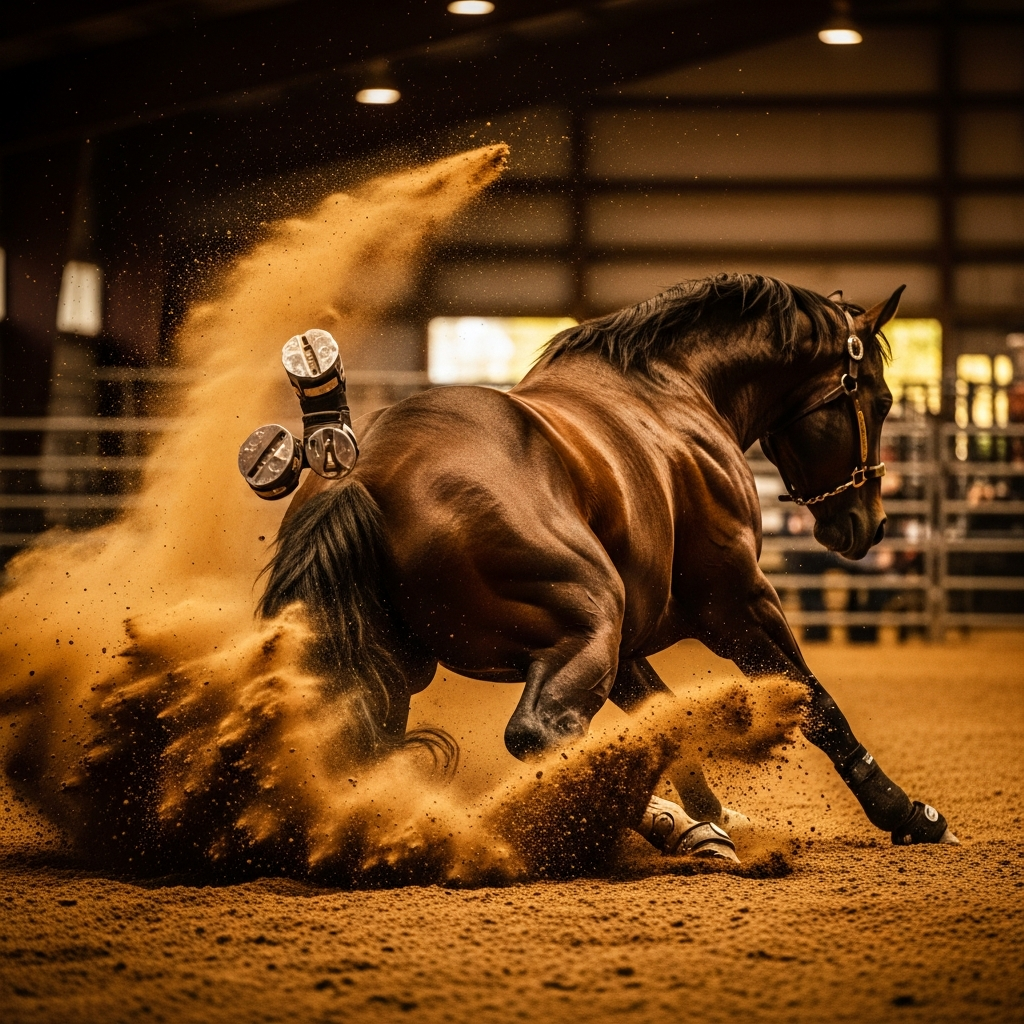
You're looking at a Quarter Horse priced at €18,000 and the seller mentions "Smart Chic Olena on the sire's side." Should that move the needle? Absolutely — but only if you know what it means. This guide cuts through the noise: which bloodlines dominate modern western sport horses, what they pass on genetically, and what European buyers need to know before signing a purchase agreement.
As of May 2026. All prices indicative. Performance data on individual sires referenced from publicly available NRHA/NCHA records and intended as general guidance.
Why bloodlines actually matter when buying a Quarter Horse
A Quarter Horse's pedigree is not a vanity plate — it's a performance record condensed into a family tree. When a stallion consistently produces offspring that win, that pattern repeats across generations because the underlying genetics are real. That's why two physically similar three-year-olds can be priced €10,000 apart: one carries documented sport genetics, the other doesn't.
The "by X out of Y" notation on every AQHA passport tells you the sire (by) and dam (out of). The more proven performance horses appear in the first two generations, the stronger the probability — not a guarantee, but a well-grounded probability — that this individual carries the traits you're looking for. Our full Quarter Horse buying guide for Europe walks through the complete purchase process.
The three bloodlines that run modern reining
NRHA Germany is the world's second-largest reining association with approximately 2,500 members — directly behind the USA. Reining is the fastest-growing western discipline in Europe, and these three stallions have shaped the gene pool that dominates European competition:
Smart Chic Olena (1985, by Doc O'Lena)
Smart Chic Olena — a 1985 sorrel, son of the legendary Doc O'Lena — rewrote what a modern reining horse could be. NRHA Hall of Fame inductee, his offspring and descendants appear throughout European competition pedigrees. What he passes on reliably: a trainable, cooperative temperament; clean, ground-covering stops; and the mental steadiness to perform under pressure. For non-pro and amateur buyers, Smart Chic Olena blood is often described as "forgiving" — horses that help their riders rather than testing them.
Peptoboonsmal (by Peppy San Badger × Gunnatrashya)
Peptoboonsmal is arguably the most influential cutting and reining sire of the modern era. His offspring dominate both NCHA and NRHA events at the highest levels. The trait he's famous for is "cow sense" — an almost instinctive response to cattle movement that shows up reliably generation after generation. European cutting and cowhorse programs prize his blood highly.
Genetic note for buyers: Peptoboonsmal and related Doc Bar-descent lines are known carriers of HERDA (Hereditary Equine Regional Dermal Asthenia). This matters for breeding, not sport: carriers (N/HERDA) can be ridden, trained and shown without restriction. The disease only affects foals born from two carrier parents. Always request the DNA test result — N/N or N/HERDA, both are fine for sport use. Our breeding stallion buying guide covers genetic health tests in detail.
Dual Rey (by Dual Pep)
Dual Rey has had an outsized influence on European reining breeding over the past two decades. The son of Dual Pep brings explosive hindquarter power, exceptional cow work ability, and an adaptability to different training systems that suits the varied European market well. Austrian and German breeding programmes in particular show his name frequently. His temperament runs slightly hotter than pure Smart Chic Olena lines — making him a favourite for ambitious non-pros who want a horse with genuine fire and scope.
Cutting & Cowhorse: High Brow Cat and Metallic Cat
In cutting, one dynasty has dominated above all others: the High Brow Cat line. High Brow Cat established a cutting sire legacy that now runs through nearly every top cutting horse worldwide.
His most celebrated son: Metallic Cat — a 2005 red roan stallion by High Brow Cat out of Chers Shadow (by Peptoboonsmal). Metallic Cat is among the most successful cutting sires of all time by progeny earnings, with offspring consistently performing at the highest levels of NCHA competition. For European buyers: Metallic Cat offspring are still comparatively rare on the continent, which pushes prices up — but also means resale value tends to hold well.
When buying a cutting or working cowhorse horse, scrutinise the sire's line carefully: horses with documented NCHA earnings in the direct line command significantly higher resale prices than equally trained horses without proven sport genetics. Our western horse buying guide covers the broader market.
Trail, Pleasure & All-Around: the classic lines
Not every buyer wants a competitive athlete. For trail, western pleasure and all-around disciplines, different bloodlines deliver what matters most — consistent, smooth movement and a reliably calm mind:
- Zippo Pine Bar: One of the most registered Quarter Horse sires in AQHA history. Zippo Pine Bar offspring are known for fluid, consistent movement and a cooperative, curious temperament — classic all-around genetics. His blood appears in a large proportion of leisure-oriented Quarter Horses across Europe.
- Doc Bar: Foundation sire of both the cutting and reining worlds, but his influence runs through the entire modern Quarter Horse population. Doc Bar descendants combine intelligence with athleticism — appearing somewhere in nearly every European western horse pedigree.
- Hollywood Dun It: The western pleasure specialist. Hollywood Dun It offspring are known for exceptionally smooth, deep-tracking movement with natural softness — critical for show-ring pleasure disciplines. For beginners and leisure riders, these types tend to be quieter than pure performance lines.
Barrel Racing: Frenchmans Guy and Dash For Cash
Barrel racing is growing steadily in Germany and Austria, and the bloodlines that drive it are distinct from reining or pleasure horses:
- Frenchmans Guy: The definitive modern barrel sire. Frenchmans Guy offspring combine speed, agility and mental focus required for barrel racing with trainability that works well for European riders and training systems.
- Dash For Cash: Foundation sire of the modern speed events world. Many of the best barrel horses worldwide carry Dash For Cash blood — his influence in speed events is comparable to Smart Chic Olena's in reining.
Barrel-specific bloodlines are harder to source in Europe than reining horses. Many buyers import from the US, or work with the small number of European breeders who have built focused speed programmes.
Bloodlines and genetics: what you need to know before you buy
Bloodlines pass on both performance traits and genetic health predispositions. Four conditions matter most for Quarter Horse buyers:
- HYPP (Hyperkalemic Periodic Paralysis): Linked to the Impressive bloodline. Any horse with Impressive in its pedigree must have a documented N/N result — N/H or H/H horses require careful dietary management and are not recommended for breeding.
- HERDA (Hereditary Equine Regional Dermal Asthenia): Common in cutting lines (Peptoboonsmal, Doc Bar descent). Carriers (N/HERDA) are fully usable for sport. The disease only manifests in foals from two carrier parents. Request the test certificate — it's a standard ask from any reputable seller.
- GBED (Glycogen Branching Enzyme Deficiency): Relevant for breeding decisions, as it causes fatal foal disease. Sport-use-only buyers rarely face a practical issue, but the test matters if you plan to breed.
- PSSM (Polysaccharide Storage Myopathy): Quarter Horses carry elevated prevalence compared to other breeds. PSSM-positive horses can be ridden successfully with appropriate dietary and exercise management. The test tells you what management protocol to follow.
What documented bloodlines do for resale value
A Quarter Horse with documented NRHA or NCHA earnings in the direct line is significantly easier to market at resale than a horse of equal training level but unknown genetics. Working rule of thumb: a recognisable, proven sire can add €5,000 to €20,000 to resale price versus an unknown sire at the same training level — provided the paperwork is complete and the registration chain is clean.
Check the full registration chain: AQHA passport current, stallion's active membership at time of breeding, foal's registration certificate. Gaps in this chain create problems at resale. Our horse purchase contract guide walks through what documentation must be referenced in the bill of sale. For a realistic picture of what ongoing ownership costs across DACH and Italy — board, farrier, vet, insurance — see our how much does a western horse cost guide.
The European reining market in 2024
NRHA Germany, with approximately 2,500 members, is the world's second-largest reining association after the USA. The NRHA European Derby — held at Equita Lyon (Lyon, France) in October and November 2024 — is the flagship event of European reining. The bloodlines displayed there reflect what European breeding programmes have prioritised: predominantly the reining lines described above. If you're buying a horse with competitive reining aspirations, read its pedigree in the context of this market. Our complete reining horse buying guide covers what NRHA scores mean for European buyers.
Frequently asked questions about Quarter Horse bloodlines
Which bloodline is best for reining beginners?
For riders new to reining, horses with Dual Rey or Smart Chic Olena blood tend to be the most approachable — they're known for cooperative temperaments and high trainability. Pure Peptoboonsmal lines can carry stronger cow instincts, which is excellent for cutting but can feel more demanding in early reining training. Always consult your trainer before choosing.
Do HERDA carriers need to be avoided when buying?
No. HERDA carriers (N/HERDA) can be ridden, trained and shown without restriction. The disease only manifests in foals born from two carrier parents. The risk lies entirely in untested breeding decisions, not in sport use. A DNA test result is all you need to make an informed call.
What do Quarter Horses with NRHA bloodlines cost in Europe?
As of May 2026, indicative: young green horses with recognised reining bloodlines, approximately €5,000–€15,000. Horses at Training Level, approximately €12,000–€30,000. Finished non-pro competition horses, approximately €25,000–€70,000. Top open-level sport horses, €60,000 and up. European horses typically sit below comparable US prices, with a smaller selection available.
How do I verify a Quarter Horse's pedigree?
The AQHA passport contains the pedigree to four generations. You can also view the pedigree free on the AQHA website and research NRHA earnings of ancestors through the public NRHA database portal. Critical check: the microchip number on the passport must match the physical horse — verify this before purchase.
Which bloodlines also work for Western Pleasure and Trail?
For trail, pleasure and all-around disciplines, Doc Bar, Zippo Pine Bar and Hollywood Dun It lines are ideal: calmer, more even movement, cooperative temperament and natural softness. Pure reining or cutting lines can bring more energy than leisure riders expect.
Read next: Frenchmans Guy and Dash For Cash in the pedigree and want to go deeper? Our guide buying a barrel racing horse in Europe explains what speed bloodlines mean in practice — prices, pre-purchase exam and trial run included.
Reading bloodlines is a skill worth learning
Quarter Horse bloodlines are not rocket science. Learn ten key stallion names, understand what each passes on, and you can read a pedigree like a brief biography — quickly seeing whether a horse matches what you're looking for. Take the time to research your prospect's ancestry, ask for the genetic health tests, and only buy with complete, clean paperwork.
Dream Quarters is your destination for European western horses with documented bloodlines:
👉 Browse Quarter Horses on Dream Quarters
👉 Find breeding stallions with top bloodlines
"Know the bloodline — know the horse." — Dream Quarters Team